Kruger Family Industries (KFI) Internship Capstone Project: Calf Hutch
KFI was looking to dive into the calf hutch market and tasked their summer interns with designing calf hutches that KFI could manufacture. The following requirements were provided:
Easy to clean
Lightweight and durable
Low cost: Single shell < $225 Single Kit < $32
Must fit cattle 2 weeks to 2 months old
Properly ventilated
Must be formable in house (thermoformed)
Easy to store/stack
I began the design process by completing market research to determine key features on the market, additional needs for the end users, in-house processing parameters and patent infringement issues. Next, I developed two calf hutch concepts that were designed to be thermoformed. This design process required precise drafting and tooling techniques to ensure that after the plastic is cooled that it’s able to be easily removed from the mold.
Calf Hutch Concept #1
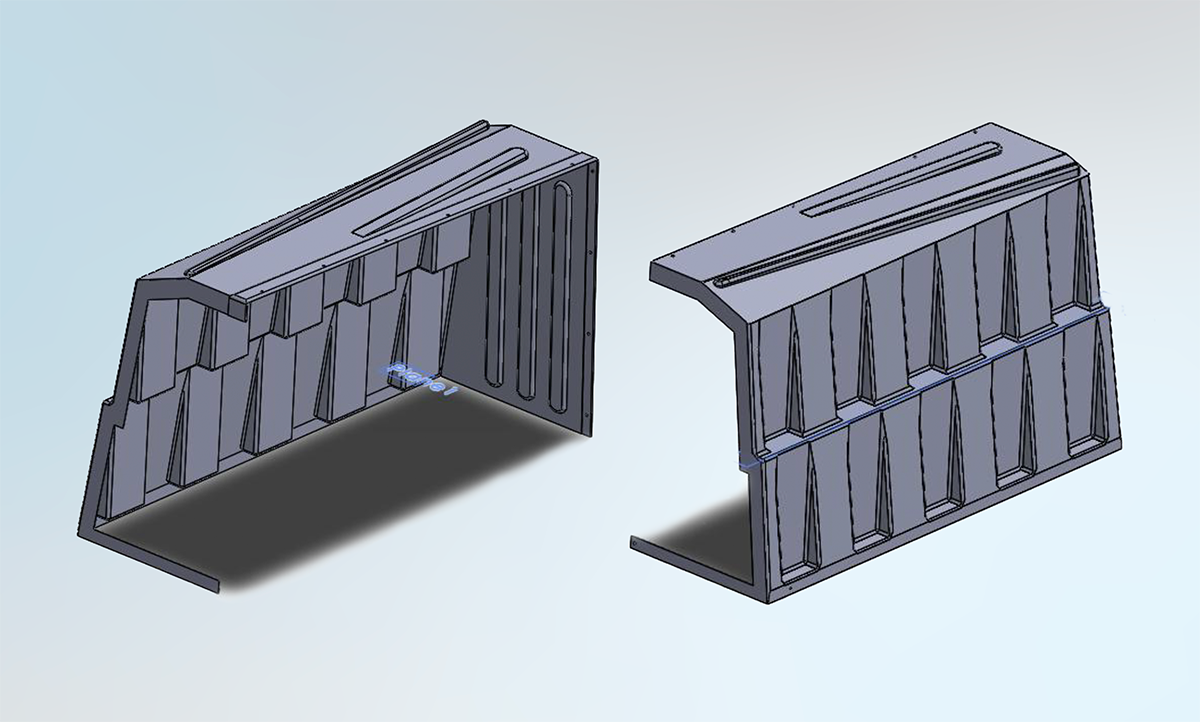
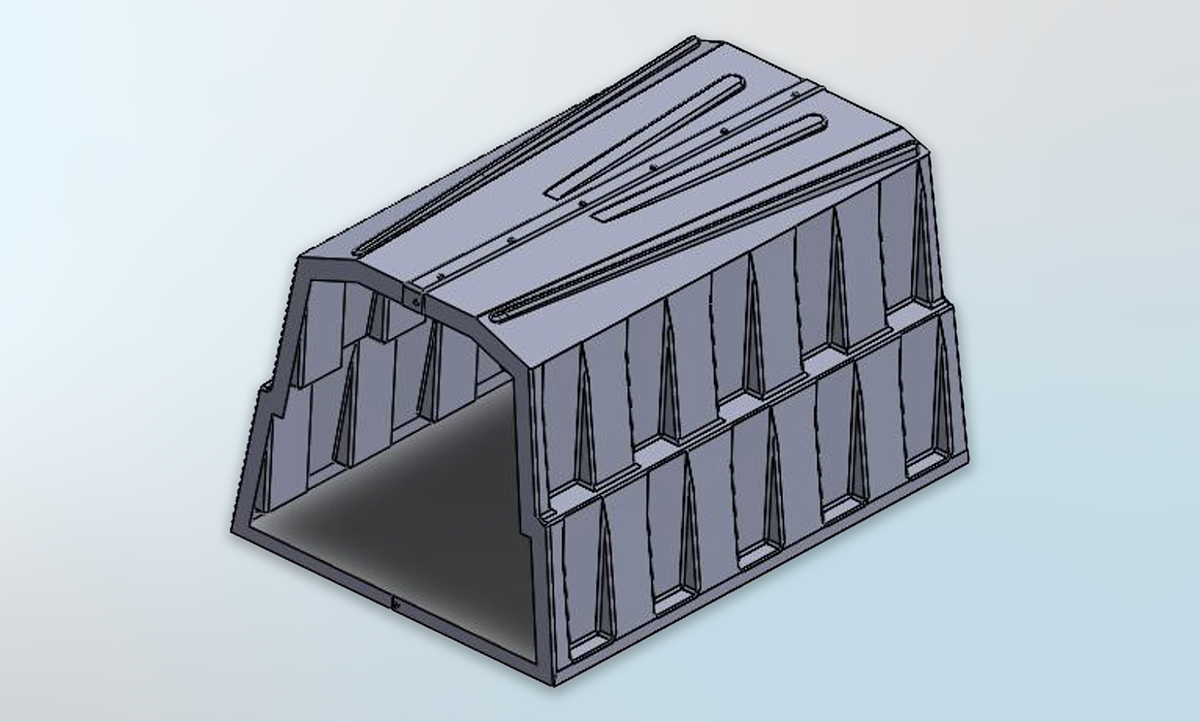
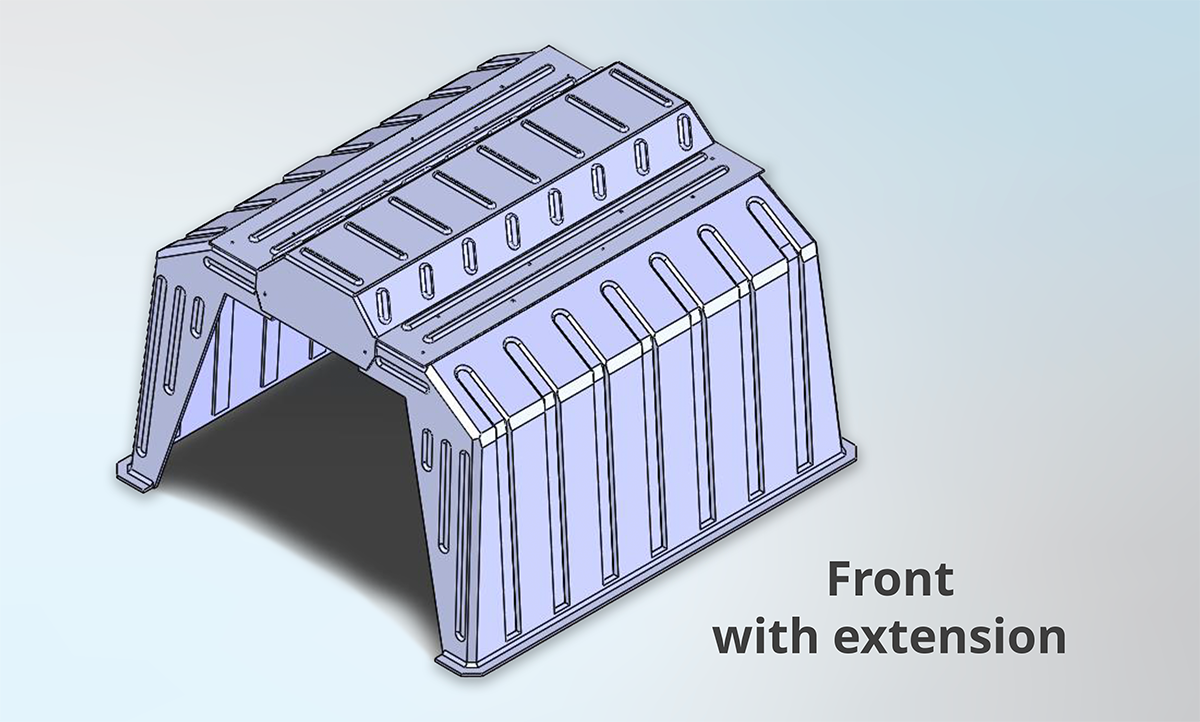
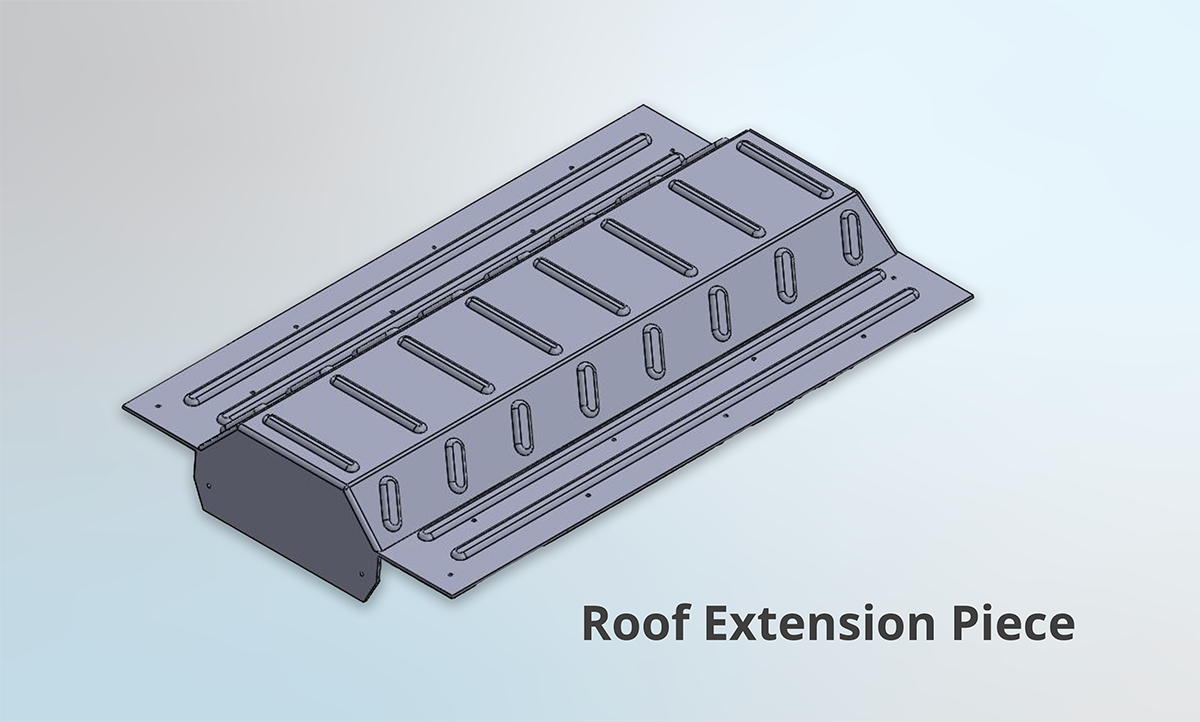
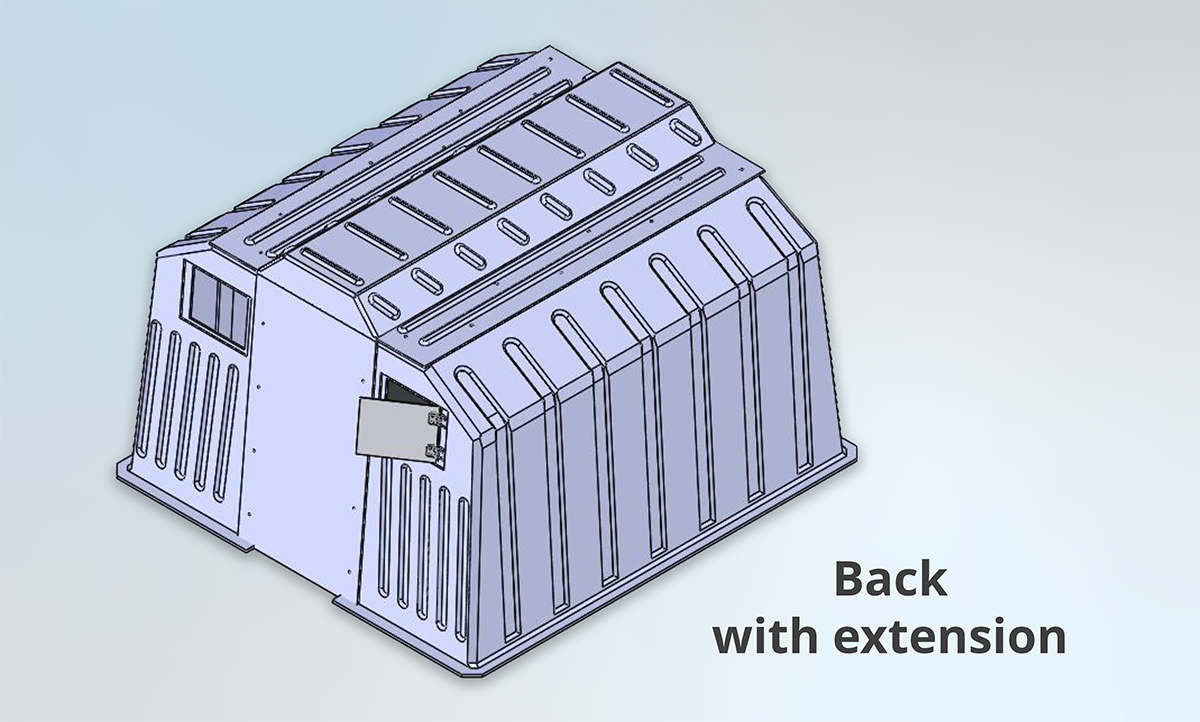
This concept was created for outdoor use as a modular resizable hutch that may grow alongside the calf, and can also house two calves with an extension in place. This concept is designed to come in once piece, but has a groove down the center that makes it easy for the end user to use a dremel or circular saw to cut along the groove to allow for the hutch to be extended into a two calf hutch. There are two extensions pieces—one for the roof and one for the back of the hutch. The front opening becomes wider. The extension pieces are secured with bolts and rubber washers to prevent any leaks.
Calf Hutch Concept #2
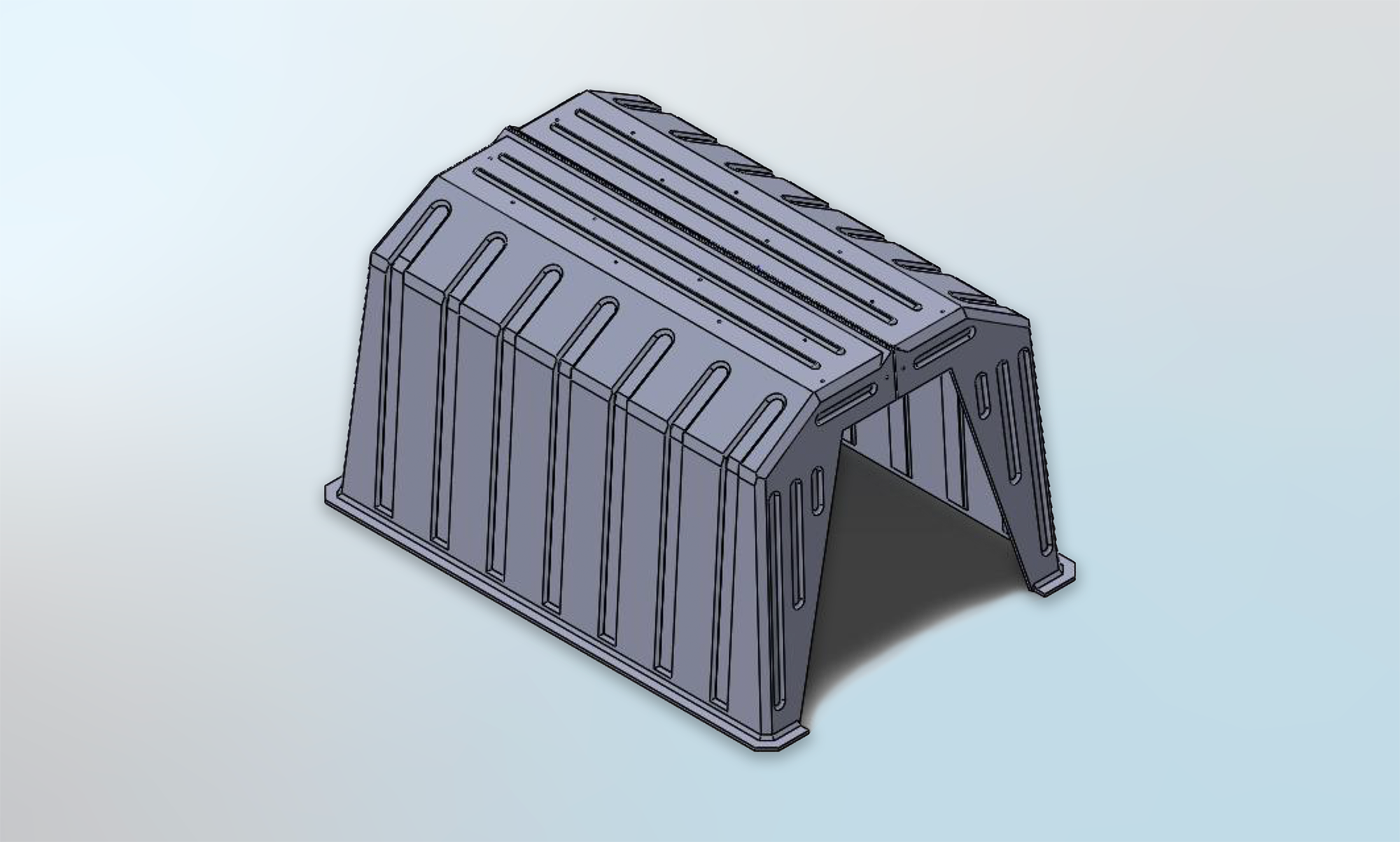
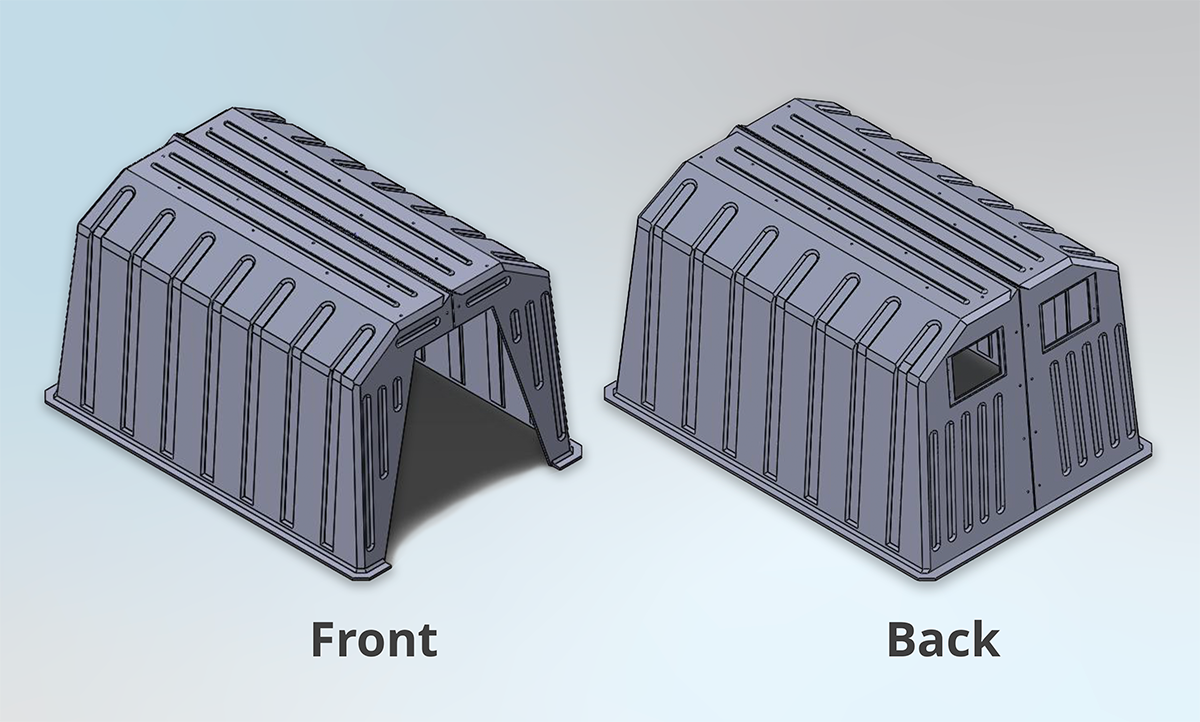
This concept was created for outdoor use as a modular resizable hutch that may grow alongside the calf, and can also house two calves with an extension in place. This concept is designed to come in once piece, but has a groove down the center that makes it easy for the end user to use a dremel or circular saw to cut along the groove to allow for the hutch to be extended into a two calf hutch. There are two extensions pieces—one for the roof and one for the back of the hutch. The front opening becomes wider. The extension pieces are secured with bolts and rubber washers to prevent any leaks.